Rubén Darío
Where? Far away, the overwhelming, monumental view of strange architectures, visionary orders, styles of a portentous and extravagant Orientalism. At his feet, a livid soil; not far away, the foliage of thin, desolate trees, stretching up towards an implacable sky, silent and strange, their branches pleading, in the vague expression of a mute lament. In that solitude, Honorio feels a cold fright possess him…
When? It is an hour immemorial, a grain escaped perhaps from the hourglass of time. The light that shines is not of the sun; it is like the sickening phosphorescent clarity of spectral stars. Honorio suffers the effect of a fatal moment, and he knows that at that incomprehensible hour all is cloaked in the dolorous fog of a universal anxiety. As he lifts up his eyes a shiver runs along the cords of his nerves: rising from the deep sky, mysterious constellations form enigmatic, prophetic signs of imminent and irremediable catastrophes… Honorio, oppressed and terrified, lets escape from his lips a ghastly groan: Aughh!…
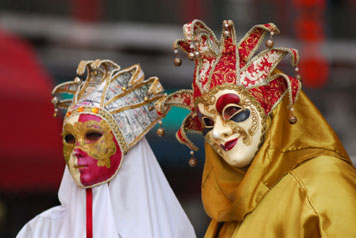 And as if his voice had the power of a demiurgic force, that immense city full of towers and roundabouts, of arches and spirals, collapses without noise or failure, breaking a fine spider’s web.
How and why did there appear in Honorio’s memory this phrase of a dreamer: the tyranny of the human face? He heard it inside his brain, and as if he were the propitious victim offered up to a cruel deity, he comprehended that the moment of martyrdom was drawing near, the horrible martyrdom to which he would be subjected… Oh inexplicable suffering of the solitary damned! His extremities stiffened, tied up in knots of terror; his hairs stood on end like those of Job when a spirit passed close by him; his tongue fused to the roof of his mouth, frozen and immobile; and his open, staring eyes began to contemplate the dumbfounding parade. Before him marched the infinite legion of the Features and the innumerable soldiers of the Expressions.
First came the enormous faces that the neurotic often see when they first fall asleep, faces of giants, jolly, threatening, pensive or tender.
Later…
Little by little he began to recognize in his painful vision each of these lines, profiles and features: a pasha with a bald forehead and drowsy eyes; an Assyrian king’s face, with his beard in plaits; a fat-chinned Vitelio, and a black, black man dying of laughter. One white mask multiplied in all the expressions: Pierrot. Indifferent Pierrot, amorous Pierrot, bewildered Pierrot, terrible Pierrot, Pierrot, fainting from hilarity; painful, wily, naive, vain, cruel, sweet, criminal: Pierrot revealed the poem of his soul in wrinkles, grimaces, winks and facial twists. Behind him, all manner of farce and symbolic incarnation: enormous grey top hats rose up, a hundred stuffed John Bulls and ghastly Uncle Sams, behind whom Punch mocked the malice of their looks above his curved nose. Near a yellow mandarin with circumflex eyes and a pointy moustache, a swelled up friar, into whose cucurbitaceous visage were sunken two black beans for pupils; long French noses, powerful German jaws, great Italian moustaches, Spanish scowls; exotic faces: of the black King Balthazar, of de Quincey’s Malay, of a Persian, of a gaucho, of a bullfighter, of an Inquisitor… “Oh, my God…” pleaded Honorio. Then he heard distinctly a voice that told him: “Not yet, go on to the end!” And there appeared the antlike masses of the banal life of the cities, faces representing every state, appetite, expression, and instinct of the being called Man; the broad bald patch of the bespectacled wise man, the ornate, rabid, bejewelled alcoholic nose shining on the face of the obese banker; fat and clumsy mouths; protruding jawbones and bestial cheekbones; livid visages, the countenance of the consumptive rentier; the look of the consumptive, the appropriately stupid laugh of the lounge room imbecile, the supplicating expression of the beggar; those three special cases: the tribune, the auctioneer, and the charlatan, at different stages of their different harangues: “Help!” cried Honorio.
And then the Masks came bursting forth, while in the sky a gentle colour of oriental gold slowly faded. The legion of the Masks! First appeared a mask of a Greek actor, horrified and tragic, like the face of Orestes before the implacable Eumenides; and another mask laughing, like a gargoyle brimming over with jokes. Then by a mnemonic phenomenon Honorio thought of Japanese theatre, and before his eyes exploded a deluge of masks of Nippon: the smiling, toothless mask of Itsukushima’s treasure, a mask of Deme Jioman, whose tight cheeks, forehead furrowed with a triple vermicular wrinkle and splayed noses gave it a quality of supreme bestial jolliness; visages of Noriaki, of an aggressive fealty; grimaces of Asiatic Quasimodos, and radiant masks of gods, all of gold. From China, Lao Tse, with his immense cranium; the sensual Pu-Tai with his idiot’s laugh; of Konei-Sing, god of literature, the mask of Mephistopheles; and with their helmets, goatees and wispy moustaches, marched past the masks of mandarins and warriors. Finally, Honorio saw a kind of carmine and vermillion blaze as the carnivalesque swarm whirled before his stare. All the eyes: almond-shaped, round-shaped, triangular, almost amorphous; all the noses: snubbed, in the style of Roxelana or the Bourbons, erect, conic, phallic or ignoble, cavernous, monastic, martial or distinguished; all the mouths: arched, half-moon-shaped, ogive, made with a hole-punch, fleshy-lipped, mystic, sensual, sweet-toothed, abject, canine, batrachian, equestrian, mulish, porkish, delicate, overflowing, unbridled, twisted… all the passions, gluttony, envy, lust, the seven deadly sins multiplied by seven times seventy…
And Honorio could take no more; he felt a sudden faint, and gave into a sweet twilight of dreaming, while to his ears came the strains of a joyful Carnival band…
The enormous influence of Nicaraguan-born writer and poet Rubén Darío (1867-1916) on the Latin American literature of the past century is unmistakable. His fantastic themes, surrealist imagery and sophisticated language loaded with literary allusions have become hallmarks of Latin American fiction ever since.
Translated by Martin Boyd