Mexico in a Time of Fury

México en el tiempo de la rabia. Arte y literatura de la guerra, el dolor y la violencia (2006-2018)
Editors: Alejandro Zamora, Gustavo Ogarrio
Publisher: Universidad Autónoma del Estado de Morelos
Cuernavaca, 2020

The six articles and introduction contained in this book explore two important aspects of contemporary Mexico: on one hand, they consider the art, literature, documentary films and narrative journalism produced during and in response to the so-called “war on organized crime” (2006-2018); and on the other, they analyze some of the historical and cultural conditions in which that “war” has occurred, and which, at the same time, have been generated by it.

Continue reading

An inversion of an American literary tradition

Signs Preceding the End of the World
Author: Yuri Herrera
Translator: Lisa Dillman
Publisher: And Other Stories Press
London, 2015

Review by Martin Boyd

It would be hard to find a contemporary Mexican novel that offers a more subversive allegory of US-Mexican relations than Yuri Herrera’s novel Signs Preceding the End of the World (2015). This short novel, whose surreal tone has given rise to comparisons to Pedro Páramo, constitutes a kind of inversion of the traditional US borderlands chronicle that demonizes the Mexican other: here, we have a borderland tale told from the Mexican perspective, where it is the United States that represents the infernal mirror.

Continue reading

Mexican Culture in Animated Translation

The Book of Life
Director: Jorge Gutiérrez
Studio: Reel FX/20th Century Fox
Mexico/United States, 2014

Review by Martin Boyd

In a previous review for this Forum, I’ve already made mention of the dearth of Mexican family films for those parents who want their children exposed to Mexican culture and to break the Disney monotony that young viewers are subjected to almost daily. Indeed, the Hollywood monopoly on movie production for children is so severe that we are left with no other option than to search for representations of Mexican culture in US cinema itself. Notable among the few positive representations of Mexico in Hollywood cinema is The Book of Life, an animated film by Mexican director Jorge Gutiérrez, produced with the support of Guillermo del Toro, one of the most prominent Mexican filmmakers of recent years.

Continue reading

(Almost) a Mexican Family Film

Álex Perea in Zurdo

Álex Perea in Zurdo

Zurdo
Director: Carlos Salcés
Studio: Altavista Films
Mexico, 2003

Review by Martin Boyd

A series of internationally successful Mexican films over the past twenty years has led critics to speak of a Nuevo Cine Mexicano (“New Mexican Cinema”), a resurgence in Mexico’s film industry after decades of decline. With filmmakers like Alfonso Cuarón, Alejandro González Iñárritu and Guillermo del Toro as some of its most outstanding representatives, the movement is characterized by its dark overtones, with themes related to violence (Amores Perros), the drug trade (Rudo y Cursi), sexuality (Y tu mamá también) and the frankly grotesque (Pan’s Labyrinth), themes that are all quite popular in the world of arthouse cinema, but that don’t leave much room for the production of family films. In this context, a film like Zurdo, by Mexico City director Carlos Salces, whose protagonist is an 11-year-old with a skill for playing marbles, seems like a ray of light in the darkness for parents who want their children to see a little Mexican cinema to break up the Disney monotony. Unfortunately, in spite of many points in its favour, in the end Zurdo falls prey to the same fascination for bleak themes from which so many films of the Nuevo Cine Mexicano seem to suffer, and thus disqualifies itself as an ideal film for the whole family to enjoy.

Continue reading

Documenting the Chilean Exile Experience

peddleYoung, Well-Educated and Adaptable: Chilean Exiles in Ontario and Quebec, 1973-2010
Author: Francis Peddie
Publisher: University of Manitoba Press, Winnipeg, 2014

Review by Martin Boyd

The Spanish-speaking community is now one of Canada’s largest minority language communities. According to the 2012 national census, there are 441,000 native Spanish speakers in the country, making it Canada’s second most widely spoken minority language. Because it has grown so rapidly – from almost nothing a mere 50 years ago to its considerable size today – Hispanic Canadian history is a field still very much in its infancy. Fortunately, however, it is a field that is beginning to attract the attention of historians like Francis Peddie, whose examination of the experiences of Chilean exiles – a group of extreme importance to the establishment of this country’s Spanish-speaking community – constitutes a valuable contribution to the library of Canada’s multicultural history.

Continue reading

The Monarch Connection

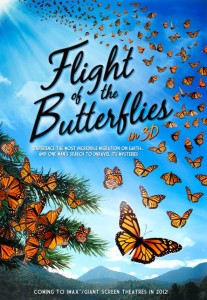
Flight of the ButterfliesFlight of the Butterflies
Director: Mike Slee
Studio: SK Films/Sin Sentido Films
Canada/Mexico, 2012

Review by Martin Boyd

When I founded Diálogos in 2006, my wife suggested adopting a monarch butterfly as the company logo. Apart from its obvious aesthetic appeal, the symbolic power of the monarch seemed perfect; what could be a better logo for a Toronto-based company whose purpose is to promote dialogue between English- and Spanish-speaking worlds than a butterfly that makes an incredible 4,000 kilometre journey between Mexico and Canada every year? But I’d never given much more thought than this to the amazing story of the monarch until this week, when I had the opportunity of seeing Mike Slee’s documentary Flight of the Butterflies at the gala opening of MexFest at Scotiabank Theatre.

Continue reading

A Milestone in Hispanic-Canadian Literature

CloudburstCloudburst: An Anthology of Hispanic Canadian Short Stories
Editors:  Luis Molina Lora, Julio Torres-Recinos
Publisher: University of Ottawa Press
Ottawa, 2013

Review by Martin Boyd

In 2008, the publication of the anthology edited by Luis Molina Lora and Julio Torres-Recinos, Retrato de una nube. Primera antología del cuento hispano canadiense [“Portrait of a Cloud: First Anthology of Hispanic Canadian Short Fiction”] marked a milestone in Hispanic Canadian literature: the first anthology exclusively dedicated to short stories written by Hispanic Canadian authors. Five years later, the appearance of the translation of the same anthology into English, under the title Cloudburst: An Anthology of Hispanic Canadian Short Stories, published by University of Ottawa Press, marks another milestone: the first anthology of Hispanic Canadian short stories translated into English, making the richness and diversity of Hispanic Canadian short fiction available to English-speaking readers for the first time.

Continue reading

A Comic Look at the Two Mexicos

Nosotros los Nobles
Director: Gaz Alazraki
Studio: Alazraki Films
Mexico, 2013

Review by Martin Boyd

It is no secret to most Mexicans that the central issue underlying all the turmoil that has affected their country in recent years – from the violence of the so-called “drug war” to the teacher protests that have brought Mexico City to a standstill on several occasions this year – is the growing gap between rich and poor. The Mexican economy has expanded considerably in recent decades to turn the country into one of the world’s economic superpowers; nevertheless, only a select group of Mexicans have benefited from the revenues earned from the country’s increasing productivity. Mexico’s economic inequality has led many commentators to speak of the emergence of “two Mexicos”, “one that is the beneficiary of neoliberal globalization, and the other that receives scarcely a few drops of the wealth that is created” (Agustín Basave, El Universal).

Continue reading

We are Quetzalcoatl

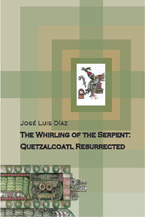
The Whirling of the Serpent José Luis DíazThe Whirling of the Serpent: Quetzalcoatl Resurrected
Author: José Luis Díaz
Publisher: Antares
Toronto, 2009

Review by Manuel Romero Mier y Terán

Being Mexican sometimes seems like an internal contradiction, as the vast majority of the Mexican population hold both the Spanish Conquistador and his indigenous victim in disdain. But this reality of our nation – which also resonates in other countries of Latin America – was not always the case. Before other chimeras like the Virgin of Guadalupe, China Poblana and the Mestizo, there was the Plumed Serpent, Lord of the Earth and Sky: Quetzalcoatl. He was a character that my generation learned about in history text books at elementary school as a god, priest or wise man who was expelled from his home after getting drunk on pulque, and who then departed on a boat of serpents promising he would return one day, thereby forging one of the most meaningful legends of Mexican psychological identity.

Continue reading

Keep Hope Alive

Martha Bátiz and Martin Boyd at the book launch for “Papalotero”

A heartfelt thank you to all who attended the book launch for my novel Papalotero at Accents Bookstore, this week. For those who missed it, an excerpt from the presentation on the novel by Mexican-Canadian writer Martha Bátiz is included below. – Martin Boyd

Continue reading