Yólotl Cruz Mendoza
The affirmation made by José Emilio Pacheco in his Antología del modernismo(1) is true with regard to the work of Amado Nervo: the decade of the fifties was a low period for the writer. This translated into a general lack of critical interest in appreciating the diversity of his work, as demonstrated by his Obras completas (“Complete Works”, 1952) published by Alfonso Méndez Plancarte and Francisco González Guerrero with the Aguilar publishing house of Madrid. The greatest defect, according to the critics, was that as Nervo was popular with the general public, his writing lacked literary value. Popular taste and literary quality could not go hand in hand. This discrediting of his work had its beginnings around 1928, with the Antología de literatura mexicana moderna edited by Jorge Cuesta, a definitive collection for the Mexican literary canon in the 20th century.
The fiftieth anniversary of the poet’s death, at the end of the sixties, might have passed unnoticed if it were not for two works that took a direction until then unexplored: Genio y figura de Amado Nervo (1968) by Manuel Durán(2) and “Del pensamiento de Amado Nervo (tema y variaciones)” (1969) by Ramón Xirau(3).
Since 1943, the year in which Bernardo Ortiz de Montellano published Figura, amor y muerte de Amado Nervo, nothing had been written about this author with objectivity or with the purpose of reviving the central themes of his poetry; the readings that Durán and Xirau offer of Nervo’s poetry bring into play the “task and occupation of participation: which is enriched understanding” (Mito y poesía, p. 58), which Xirau spoke of as an indispensable quality in a literary critic.
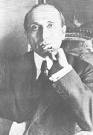
Amado Nervo
The decades to follow were a barren time in the study of Nervo’s work, but the seeds planted by Durán and Xirau would bear fruit at the end of the 20th century. One hundred years had passed since Nervo had demonstrated his importance to Hispano-American literature in the magazines Revista Azul and Revista Moderna.
José Luis Martínez himself, who in 1950 had classified him as a sentimental poet, now took on the task of restoring the role of the critic with regard to Nervo’s work, to:
“properly clarify the nature of the reaction against him, and do so from an absolutely contemporary perspective. I now believe that poetry can be created as much by taking the road of the sentiments and even of sentimental confessions, as through verbal elegance […] It must also be affirmed, with sufficient weight, that Nervo is not merely sentimental; he is a writer with a very wide range of literary capacities, and offers work of great interest for everyone.”(4)
Today, the prominent figures in the field of the criticism, compilation and preservation of Nervo’s work are José Ricardo Chaves in narrative studies, and Gustavo Jiménez Aguirre, who coordinates a research team on behalf of the National Autonomous University of Mexico for the critical editions of Nervo’s prose and verse, as well as recent bachelor’s, master’s and doctoral theses. At the same time, Carlos Monsiváis published a new literary biography of the Mexican poet in 2002, with the title Yo te bendigo vida, which highlights his poetic and narrative achievements.
The writings and the fame of Amado Nervo are signalled in his own name, which, as he himself affirmed, could pass for a pseudonym that well matched his first timid or “nervous” verses with which he was introduced to the literary world.
After unsuccessful studies in the Zamora Seminary, first in law and then in theology, Nervo entered the world of journalism in the bustling port city of Mazatlán, working for the daily newspaper El Correo de la Tarde, and left behind his first verses, which Méndez Plancarte would later publish under the title Mañana del poeta (“Dawn of the Poet”). These initial poems of simple rhymes are plagued with Romantic elements, similar to the work of Bécquer or Zorrilla, and marked by a devout Catholicism.
His time at El Correo de la Tarde would be definitive. During this period, Nervo tried everything, from the old Romantic overtones to the assimilation of Modernism, reflected in some of the poems that years later would make up the volume Perlas Negras (1898), such as the Parnassian “Una estatua” (“A Statue”) dated September 13, 1892:
Straight nose whose strange contours
Hellenic art could never create,
small mouth of cherished choirs,
A face, after all, never sculpted in Paros
by the admirable hand of Cleomenes!
The “blue stream of mysticism” began to inundate the soul of this young poet from Nayarit, drawing him to the decadent elements of Modernism, with the clear intention of courting “neurosis as a bride”. By mid-1894, he was ready to move on and establish himself within the dizzying atmosphere of the “fin de siecle” that had besieged the Mexican capital. His literary quests and empathies began with Rubén Darío and Manuel Gutiérrez Nájera, in spite of the tangible differences in their work.
Nervo arrived in Mexico City at the end of July, 1894, and his arrival could not have been better timed, as on August 5 his first poem appeared in the magazine Revista Azul – a new version of the poem “Ritmos” (“Rhythms”) written in Mazatlán in 1893 and subsequently included in Perlas Negras (1898). Published at the same time as Perlas Negras, Místicas apparently exalts the author’s Christian views, particularly given the famous poem “A Kempis” (“For Kempis”). However, this collection is characterized by Nervo’s adherence to Decadentism, with poems like “Gótica”, in which he wonders whether Christ still lives behind the altar, or in “Azrael”, in which he calls upon the rebel angel for shelter as his faith flees from him; the call to the angel of death recalls Baudelaire’s supplications to Satan in Les fleures du mal (1886). Furthermore, in the poems “A Felipe II” (“To King Felipe II”) and “Un padrenuestro por el alma del rey Luis de Baviera” (“A Lord’s Prayer for the Soul of King Luis de Baviera”), he associates himself with the poetics of the Damned Poets, made clearly evident in the verses “A la católica majestad de Paul Verlaine” (“To the Catholic Majesty of Paul Verlaine”) with its dedication to Rubén Darío:
Like yours, my yearning floats between two objects:
soul and flesh; and toils with a twofold current of sympathy
to find the ubiquitous beauty in unspeakable unions,
and then atones and moans with a hieratic lyre.
Indeed, the struggle between the soul and the flesh would be a recurring theme in his early poetry, as he would demonstrate again in “Delicta carnis”: “flesh, damned flesh that holds me back from heaven.” The two periods into which Nervo’s poetry may be divided are split by his journey to Paris in 1900 as correspondent for the newspaper El Imparcial. There, he would establish a close friendship with Enrique Gómez Carrillo, and above all with Rubén Darío, which would continue to grow stronger up until the death of the Nicaraguan poet. He came to know Moreás, Wilde and Catulle Méndes, visited the Exposition Universelle, and entered into an amorous relationship with Cecilia Luisa Dailliez, who years later would become “La Amada Inmóvil” (The Immobile Beloved”). With the same mood of the two previous collections, in 1901 Poemas appeared, employing obsessive Symbolist figures: the androgyne, the satyr, the siren; but the book would take on new meaning with the appearance of La hermana Agua, which he had published independently in Spain; according to Méndez Plancarte, this work is an unequalled jewel that acquires pantheist features that would be reaffirmed in Las voces (1904).
From that moment, a different Nervo came into existence, in whose poems one senses a spiritual quest; in 1902 he published El éxodo y las flores del camino, journeys across the Europe of his dreams, a remarkable achievement in its combination of travel diary, verse and poetic prose; also from this year is Lira heroica (“Heroic Lyre”), from which some of his poems were read before Mexican president Porfirio Díaz.
In 1905 he published Los jardines interiores with illustrations by Julio Ruelas and Roberto Montenegro. The first part of this collection appears to be subject to the same themes as his previous books, but poems are presented with interesting rhythmic recoveries of the Spanish “Romancero”, such as in “La canción de Flor de Mayo” (“Song of the May Flower”):
Flower of May, like a ray
at evening, it died…
I loved you, Flower of May,
you know this, but God did not wish it so!
And a simple refrain associated with a popular chant:
The waves come, the waves go,
Singing they come, singing they will go.
The second part of the book, subtitled Rondós vagos (“Wandering Rondos”), already begins to flirt with the esoteric dreams of the wisdom of the ancients, of fate and possible reincarnations in the poems “Como blanca teoría por el desierto…” (“Like White Theory through the Desert…”), “Pasas por el abismo de mis tristezas” (“You Pass through the Abyss of my Sorrows”) and “Yo vengo de un brumoso país lejano” (“I Come from a Misty Far-off Land”); the last of these alludes to a theme that he would develop fully in his fantasy novella Mencía (1907) – the desire to be able to fuse the dream world with the real, whereby the ethereal beloved may acquire body, form and life. This is why the third part of Los jardines interiores is dedicated to the mythical figure of Damiana, to whom he would give corporeal form by giving Cecilia Luisa the name of Ana, as a pseudonym for his femme fragil: blonde, with a “silhouette of crystal”, “clear skin/ of peach and velvet”.
In 1909, while living in Madrid as a member of the Mexican Legation, he would write En voz baja, largely dedicated to his late mother (d. 1905); in Serenidad (1914) his poetry is more intimate, reflecting his metaphysical concerns, whereby he began combining his Christian background with his reading of esoteric literature, as displayed in the poems “Mediumnidad” and “Hatha-Yoga”; but also both the lively and the melancholy verse that predominates in Spanish literature: poems like “El balcón viejo” (“The Old Balcony”), “El viejo palacio” (“The Old Palace”) and “Vieja llave” (“Old Key”) recall the aesthetics of Juan Ramón Jiménez and Manuel Machado. The poem “Dominio” (“Dominion”) merits special attention, as its line “Two green eyes, colour of copper sulphate”, would some time later inspire Ramón López Velarde to write in his poem “No me condenes” (“Don’t Condemn Me”): “rare eyes of copper sulphate”, and with this, Mexican poetry would take a new direction. The poems “Células, protozoarios” (“Cells, Protozoan”), “Pájaro milagroso” (“Miraculous Bird”) and “El color de la luna” (“The Colour of the Moon”) reflect the influence of nineteenth century Positivism upon him both on ideological and scientific levels, something already evident in the extraordinary poem “Visión” from En voz baja:
The fleeting wing
of the wandering cloud
is projected in motion
upon the highway,
where it appears,
resonant, on the hectic
highway, like a giant
Batrachian, an automobile.
The subsequent books Elevación (1917) and Plenitud (1919) achieve the same tone with an obsession with death and communication with the dead, provoked by the death of Ana Cecilia in 1912. El estanque de los lotos (1919) has a pessimistic tone; decreptitude confronts youth and forbidden love – Margarita, Ana’s daughter and his own adoptive daughter: “How to say ”I love you ”without saying ”papa?”” asks the young girl in “Peras al Olmo” (“Elm Pears”). And Nervo quietly writes ”El arquero divino” (“The Divine Archer”), which would be published posthumously by his editor and friend Alfonso Reyes. But also in this collection, Nervo feels that humanity has lost its way, and all that remains is poetry and the poet, who must continue to call for peace in the face of the terrible events of the First World War.
The dead lover would be made myth in the poems of La amada inmóvil, written between 1912 and 1918(5). By 1919, the year of Amado Nervo’s death, his fame throughout Latin America was huge, as demonstrated by funeral ceremonies for him from Montevideo to Mexico City.
Juan Domingo Argüelles, one of the 21st century’s most dedicated readers of Nervo’s poetry, points out in his text “Elevación y caída de la poesía de Amado Nervo” (“The Rise and Fall of the Poetry of Amado Nervo”) (6) that while Nervo’s funeral rites took place, López Velarde was publishing Zozobra, César Vallejo his Los heraldos negros, and one year earlier, Vicente Huidobro had published his ”Poemas árticos. Indeed, the avant-garde aesthetic of these young writers was of a tone quite distinct from Nervo’s. However, Argüelles points out, it is necessary to continue reading Nervo, to continue studying him, within his context, without ignoring the important place he has in Hispano-American literature. In short, the poetic work of Nervo cannot be dismissed; it continues to offer endless readings for the comprehension of an era, a vision of the world, now so distant for us, the readers of the 21st century, but nevertheless not unfamiliar to us.
Translated by Martin Boyd
Notes
1. Cfr. José Emilio Pacheco, Antología del modernismo (1884-1921). Mexico: UNAM/ Era, 1999. The first edition of Antología… is in the University Student Library collection, UNAM, 1970
2. Manuel Durán, Genio y figura de Amado Nervo, Buenos Aires: EUDEBA, 1969.
3. This essay was published in Vol. XXIV, No. 12 of the magazine Revista de la Universidad de México, which was dedicated to Amado Nervo. Later, in 1973, it was included in the book Mito y Poesía with the title “Amado Nervo: pensamiento y poesía”.
4. “Los fieles de Amado Nervo”, interview by Gustavo Jiménez Aguirre with Antonio Alatorre, José Ricardo Chaves, Alí Chumacero, Hugo Gutiérrez Vega, José Luis Martínez, in La jornada semanal, No. 234, 29 August 1999.
5. Some of the poems that make up this collection appear in Serenidad (1914); however, they were collected in La amada inmóvil (1920) by Alfonso Reyes. In its introduction, Reyes remarks: “this volume of largely unpublished work was ready for publication since 1915, and, according to the plan of the author, was to immediately follow Serenidad. Some of these poems had already appeared in the final part of Serenidad, and are restored to their rightful place here […] For various reasons, the manuscript was left unpublished, and continued to grow until, by 1918, there was already a complete collection.” (Alfonso Reyes’ introduction to the first edition of La amada inmóvil (1920) in Amado Nervo, En voz baja. La amada inmóvil. Ed. José María Martínez, p. 255).
6. Juan Domingo Argüelles, “Elevación y caída de la poesía de Amado Nervo”, in Amado Nervo, El libro que la vida no me dejó escribir. Una antología general, Mexico, Fondo de Cultura Económica, Fundación para las Letras Mexicanas, Universidad Nacional Autónoma de México, 2006, pp. 523-541.
Yólotl Cruz Mendoza (b. 1979) holds a masters in Mexican Literature from the National Autonomous University of Mexico (UNAM). She is currently studying her doctorate in Latin American literature at the same institution, with a thesis on the ekphrastic phenomenon in Hispano-American Modernist literature. She has undertaken to rescue and publish the narrative work of Amado Nervo and has collaborated on the website www.amadonervo.net established by the National Autonomous University of Mexico and Mexico’s National Council of Science and Technology.