Mario Huacuja
 One of the most striking memories of my early childhood is that of my encounter with the Statue of Liberty. I would have been four or five years old, and the sight of it filled me with awe; I had never seen a woman so big. Everything about her was larger than life. Her green copper colour, the strength of her arm raised to the sky, the elegance of her tunic, the golden flame of her torch and her vacant expression marked me forever. It was as if the world had been arranged to bring about that moment; my mother and I had boarded the ferry at Battery Park after walking around the walls of Clinton Castle, and I had barely begun to rock with the waves in one of the ferry’s indoor seats when sleep overtook me. On waking, before I’d completely shaken off my slumber, the Statue loomed over me with all the force of her two hundred and twenty tons, and as my bewildered eyes passed over her figure I couldn’t decide whether she was the colossal virgin of a Catholic church or a petrified monster that had escaped from my worst nightmares.
In those years, while I spent my childhood amid electric cars that whirred like drills as they crashed into the walls of my bedroom, New York was undergoing a period of formidable expansion. In the neighbourhood of Central Park, the stores on Fifth Avenue were attracting customers from all over the world with their opulent display windows; Park Avenue was enjoying a period of splendour with its stratospherically pricey apartments; towards the south of Manhattan, the Village and Soho had become a magnet for writers, musicians, actors, filmmakers and painters from the rest of the country and from Europe, and not very far from Trinity Church, to the south of Tribeca, they had just finished the Twin Towers of the World Trade Center, designed to be the tallest buildings in the world. It was the era when the United States was leading a crusade against communism in Vietnam, and basking in the glory of having put the first man on the moon. Away up there, on that distant surface of craters and white dust, the stars and stripes had been proudly planted, identical to those that hung from the buildings of the Rockefeller Center.
Of course, I had absolutely no idea about any of this, nor was I conscious that beneath the invincible facade of the nation bubbled a tumult of social and racial tensions, which periodically exploded to the surface. Sometimes in the streets I heard screams, I saw people running, a body on the sidewalk covered with a sheet, but these seemed to me isolated incidents of no importance. My life in those days was peaceful enough, and, on holidays, a constant unfolding of new wonders.
That morning when I saw the rays of the Statue of Liberty’s crown, I imagined she was a goddess, a divinity emerging from the waters and challenging the world with the sheer force of her presence. On the tiny island where she stood was a crowd of people, but there was something in the air that made me feel alone and small before her. “Liberty”, muttered the tourists who crowded round the foot of her pedestal to photograph her profile. “La libertad” said my mother, as she carried me in one arm and pointed with the other. I listened and opened my eyes wide to take in the colossal dimensions of her stature, and as I did so I hugged my mother’s neck tightly to feel the protection of her closeness, because the statue provoked in me a kind of profound terror. Perhaps it was then that I learned, directly and definitively, that my mother would always be there to protect me from the deliriums and dangers of liberty.
Translated by Martin Boyd.
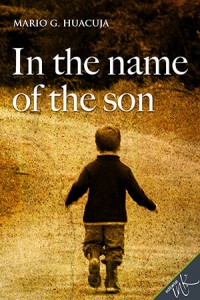
Mario Huacuja is a Mexican sociologist with a master’s degree in Latin American studies. He has published numerous political and literary essays in the magazines Nexos and Etcétera, among others. Her has worked in radio and various print media, and his experience as a journalist led him to take up fiction writing. His published novels include Temblores (1985), Las 2 orillas del río (1990), El viaje más largo (1993) and El hipnotista (2012). Huacuja’s prose style has been compared to the major writers of Latin American magic realism, although he has also been highly influenced by US authors such as Henry Miller, Arthur Miller, Truman Capote and the father of new journalism, Tom Wolfe. His first novel published in English translation, In the Name of the Son has been nominated for the Elena Poniatowska Iberoamerican Prize for 2013. The excerpt published here is from the first chapter of the novel. To buy the book (e-book version), click here. For the print version, click here.