Martin Boyd
 The following is an excerpt from my short story “Culture”, originally published in 2008 in the Canadian literary journal Other Voices. The story has recently been re-published in an excellent Spanish translation by award-winning Mexican-Canadian author and translator Martha Bátiz, for the new anthology Desde el norte: narrativa canadiense contemporánea, published by Universidad Autónoma Metropolitana in Mexico. Many thanks to Martha for giving this story new life in the Spanish language.
He stared at me over the grey wooden fence. From where I stood, his head appeared as if it were severed from his body. His face was blank, like the faces of the houses laid out in neat little rows all around us. White skin, the texture of the thin plaster walls that hold the houses up. And eyes like two little windows in those houses, through which you might observe the mundane domestic lives of the people inside.
“Who are you?” I asked him.
“I’m Adam. Who are you?”
“Maria Luisa Ortega Paredes.”
A sharp mirthless laugh shot out of his thin-lipped mouth. “Why you got so many names?” he asked me.
“I am from Chile.”
“Chilly? Where the hell is that?”
“South America.”
He looked away, down to his left, and spat. “You don’t sound American,” he said.
He is strange. They are all strange here. But I know I must be grateful to be here in the flat tranquility of this country that looks to me like a colony on Mars in one of the science fiction books I read as a child. The sun is larger and whiter here, the sky seems emptier somehow, and the plants are bizarre and bright-coloured, like nothing I’d ever believed could exist on this planet. I have left behind a country in turmoil, where every face is marked by anxiety. I have crossed the world’s largest ocean to a country 1 knew nothing of before, except that my Aunt Irma moved here many years ago, before I was born. Here, the people’s faces match the emptiness of the sky; they all walk about like somnambulists, living in a world as fixed and solid as the square brick houses in which they all live.
On my first morning here, I woke up to a distant humming sound.
I jumped from my bed and ran out to the front door. My body shivered with fear in the peculiar heat of an early summer’s morning as I stared up into the great empty sky. “Where is it? Where is it?”
“Where is what?” My Aunt Irma had come to my side and put her arms around me.
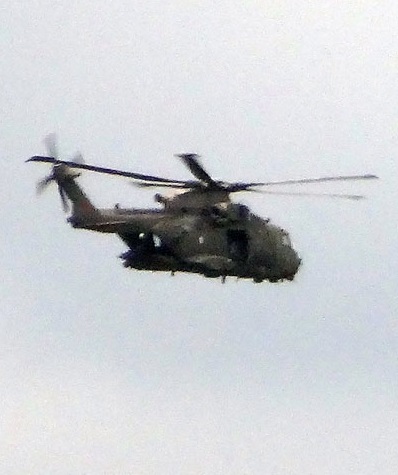
“The helicopter — I can hear it.”
My aunt placed a hand on my head and smiled. “That is not a helicopter, chica.That is a ‘lawnmower’.”
Irma looks very much like my mother. She is an island of familiarity in this vastsea of strangeness. She carne to this country twenty years ago on a holiday. She met Barry, whom she married, and she never went home again. She loves this country for its fine weather, its tranquility and the large, red faced man to whom she has chosen to devote her life. But Chile still radiates from her pores and reveals itself in her gestures. I never knew her before I carne here, except through the letters she sent home every month to my mother telling of her adventures in this wild, exotic land. She smells like my mother. When she holds me, I close my eyes and imagine that 1 am home in Santiago, in the days before that horrific morning, the 11th ofSeptember, when the sound of helicopters and fighter jets punctured the silence as they moved in to bomb the presidential palace, and the growing anxiety of the people turned suddenly into frozen panic. That morning was the only time I ever saw my brother Claudio shed tears.
“They’ve killed him,” he wept. “The bastards have killed President Allende.”
Many families like ours, who had supported Allende’s reforms, were shocked into silence by the events of that morning. But Claudio refused to be silent. He joined a protest movement to call for a return to civilian rule. Soon afterwards, he joined the ranks of the disappeared. He has not been seen or heard of for nearly two years. Those who were not silenced by shock were silenced by other means.
Losing Claudio broke my family. The sound of the phone ringing was enough to send us into a wild panic, a frenzied mixture of excitement that perhaps it was Claudio, and terror that perhaps it was news of Claudio, news we all feared to hear. In the yawning chasms of silence in between such noises, we each sank further into our own private despair.
[…]