César Vallejo

The Gravest Moment of Life

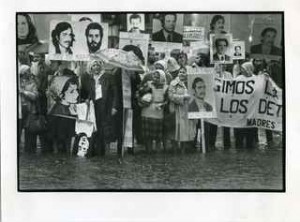
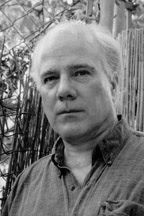
Cesar VallejoPeruvian poet, short story writer, playwright and journalist Cesar Vallejo was born in the Andean town of Santiago de Chuco in 1892 to a large family of mixed Spanish and native blood. His compassionate and moving depictions of the hardships faced by indigenous people in Peru in stories such as The Two Soras have had a huge influence on other writers of social conscience in Latin America. All of his poetry and prose is marked by a melancholic sensibility that has become a hallmark of modern Latin American literature. Vallejo died in Paris (as his poem “Black Stone on a White Stone” prophetically predicted) in 1938.
Continue reading

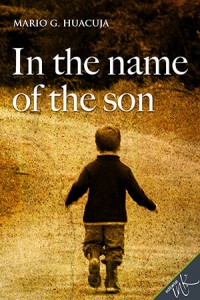
In the Name of the Son

Mario Huacuja

One of the most striking memories of my early childhood is that of my encounter with the Statue of Liberty. I would have been four or five years old, and the sight of it filled me with awe; I had never seen a woman so big. Everything about her was larger than life. Her green copper colour, the strength of her arm raised to the sky, the elegance of her tunic, the golden flame of her torch and her vacant expression marked me forever. It was as if the world had been arranged to bring about that moment; my mother and I had boarded the ferry at Battery Park after walking around the walls of Clinton Castle, and I had barely begun to rock with the waves in one of the ferry’s indoor seats when sleep overtook me. On waking, before I’d completely shaken off my slumber, the Statue loomed over me with all the force of her two hundred and twenty tons, and as my bewildered eyes passed over her figure I couldn’t decide whether she was the colossal virgin of a Catholic church or a petrified monster that had escaped from my worst nightmares.

Continue reading

Martín Agonía

Songs

The Mexican poet Martin Agonía was born in 1969 in Ecatepec de Morelos, in the State of Mexico. He has been living in Toronto for 10 years. His past experiences and his experiences as an immigrant have shaped his literary work, which is marked by social critique and a blunt description of the reality of many foreigners living in one of the most developed cities in the world. His writings have been published in the anthology Iguana, escribir el exilio (White Dwarf, 2007) and in his poetry collection La Tolvanera (2012).

Continue reading

Tania Hernández Cervantes

I Want to Live

Tania Hernández Cervantes is a Mexican writer currently living in Toronto, where she is completing a doctorate in environmental studies at York University. Her poem “I Want to Live” is a homage to Marisela Escobedo, murdered on December 16, 2010 in Ciudad Juárez for calling for justice in the case of her daughter, Rubí, after the decision of a Mexican court that released her killer in spite of the evidence against him, including a confession in open court. The case of Marisela and her daughter is one of the many tragedies resulting from the violence against women in Ciudad Juárez and the impunity currently afflicting the Mexican justice system.

Continue reading

Alfonso Reyes (1889-1959)

Vision of Anáhuac

Alfonso Reyes Ochoa, Mexican poet, essayist and fiction writer, is considered one of the most important figures of Latin American literature. Recognized by Jorge Luis Borges as “the best writer of prose in Spanish of all time”, his influence is evident in the works of authors of the Latin American “boom”, especially in those of his compatriot Carlos Fuentes. Below is a new translation of the first chapter of his famous essay “Vision of Anáhuac”, published in 1917, which offers a vision of old Mexico City at the moment of the Spanish conquest.


Continue reading

Juan, Who Made It Rain

Ignacio Castro

He danced when he felt sad, and he looked without seeing. His life was a feast of helpless feelings, barely perceptible, but certain. There were times when he would cling to vanities and make the air taste humid. He knew how to breathe; how to breathe in life. Thus he wandered, looking for a little money without trying too hard, without ever longing for it.

Continue reading

Mammoth Monologue

Martha Bátiz

The good thing is that nobody gives you dirty looks; I mean, nobody stares at you. It’s considered impolite, and the people in this city are very discreet, regardless of how you look. When somebody gets on the streetcar with a hot dog in hand and the whole carriage starts reeking of onions, nobody objects. When someone gets on who looks like he hasn’t had a bath in three months, the more sensitive people, at most, might change seats… but that’s as far as it goes.

Continue reading

Hugh Hazelton

Antimatter

Hugh Hazelton is a Montreal-based poet and translator who specializes in the comparison of Canadian and Quebec literatures with those of Latin America, and the work of Latin American writers of Canada. He has written several books of poetry and translates from Spanish, French, and Portuguese into English; his translation of Vétiver (Signature, 2005), a book of poems by Joël Des Rosiers, won the Governor General’s award for French-English translation in 2006, and his book Latinocanadá: A Critical Study of Ten Latin American Writers of Canada (McGill-Queen’s, 2007) received the Best Book award from the Canadian Association of Hispanists. “Antimatter” is the title piece from his poetry collection published by Broken Jaw Press in 2003 (the self-translated Spanish version of the collection was published by Split Quotation/La Cita Trunca in 2009), and is republished here with the author’s permission.

Continue reading

Literary Secret

Guillermo Rose


Until the night that my PC froze so unexpectedly, I had never made the connection between Juan’s death and my sudden interest in writing. At that moment I didn’t understand why such a crazy notion would occur to me, more than seven years after he had disappeared from the planet, until I began to feel so easily, powerfully and, above all, suddenly inspired to write.

Continue reading