At Peace
Amado Ruiz de Nervo y Ordaz is, without doubt, one of the most outstanding poets of the Mexican literary canon. Born in Tepic, Nayarit in 1870, he moved to Mexico City in 1894, where he soon became a prominent journalist and published his first works. In 1900 he travelled to Paris, and later worked for the Mexican government as a diplomat in Madrid, Buenos Aires and Montevideo. A consummate novelist and essayist, Nervo is nevertheless best remembered for his poetry, whose delicate combination of mysticism and melancholy makes him perhaps one of the most emblematic ambassadors of the Mexican soul.
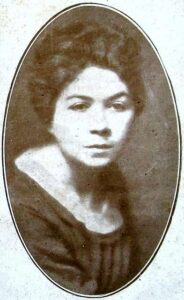 Alfonsina Storni (1892-1938): poet, professor, journalist and one of the most representative figures of the Latin American post-modernist movement. Born in Lugano (the Italian part of Switzerland) to Argentine parents, she grew up mostly in Rosario, Argentina, and moved to Buenos Aires at the age of 19. She published her first collection of poems, La Inquietud del Rosal in 1916, and by the 1920s she had become one of Argentina’s most prominent poets, renowned for her amorous and often erotic verse. A recurring theme of her poetry is male oppression of women, for which she would later become an icon for the feminist movement throughout Latin America. In 1937, on learning that she had breast cancer, Storni drowned herself in the sea off Mar del Plata. Her often romanticized death was immortalized in the song “Alfonsina y el Mar”, which has been recorded by Mercedes Sosa and Nana Mouskouri, among others.
