Intercultural Competence

Martin Boyd

Lorde_Another victim of ethnocentric violence

Lorde: another victim of ethnocentric violence

Last October, Feministing blogger Verónica Bayetti Flores launched a scathing attack on the song “Royals”, one of the biggest hits on US radio in 2013, for lyrics that Bayetti claimed are “deeply racist”. Bayetti’s argument was based on the assertion that the song’s critique of extreme wealth draws specifically on images associated with African-American hip hop stars (“gold teeth”, “Cristal”, “Maybachs”), with no specific references that might conjure up images of white American wealth (why, for example, does the song make no reference to “golf”, “polo” or “Central Park East”?). Bayetti’s argument might have had some validity if it weren’t for one very important fact that she completely elides in her analysis of the song: Lorde, the 16 year-old singer-songwriter responsible for “Royals”, is from New Zealand.

Continue reading

A Letter to God

Gregorio López y Fuentes

Una carta de DiosThe house – the only one in the whole valley – was up on one of those flattened hills which, like rudimentary pyramids, had been left by a few tribes as they continued on their pilgrimages… amid the cornstalks, the beans with their purple flowers, an unmistakable presage of a good harvest.


Continue reading

A Crash Course in Proofreading Translations

Martin Boyd

ProofreadingAs with all forms of professional writing, proofreading is an essential element in translation, as a second pair of eyes is often able to pick up minor (or sometimes major!) errors in the translated text that translators can miss in their own work, even when they’ve carefully proofread their work themselves. Unfortunately, most translator training programs dedicate very little time to instructing translators in how to handle proofreading tasks, which may end up involving a large proportion of their work as freelancers. With this in mind, based on my own experience as a translator, proofreader and translation project manager, I have developed a kind of “crash course” in proofreading translations, which basically consists of the following four simple rules:

Continue reading

Reviewing Translations

Martin Boyd

Why Translation MattersEdith Grossman, the English translator of many of the works of Gabriel García Márquez and author of the book Why Translation Matters, an examination of the low profile of translation in the English-speaking world, remarks that in book reviews of translated works, “most critics assiduously ignore the fact that they are reviewing a translation. If they do refer to the translation, they usually dismiss it with a phrase like ‘ably translated by’.” (qtd. in Salisbury).

Continue reading

Gabriela Mistral

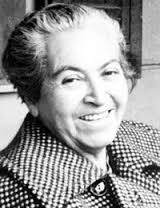
Ballad of my name

Gabriela MistralIn commemoration of International Women’s Day, this week’s post is a poem by Gabriela Mistral (1889-1957). Born in Vicuña, Chile, of indigenous and Basque descent, Mistral went on to become one of her nation’s most outstanding ambassadors and the first Latin American (and, to date, the only Latin American woman) to win the Nobel Prize for Literature, in 1945. A true Latin American icon, Mistral will be remembered as a great educator, a tireless advocate of children’s rights and, above all, the author of some of the most moving poems ever written.

Continue reading

Silencing the Source Text: The Curious Case of Artemio Cruz

Martin Boyd

La muerte de Artemio CruzIn an article published in 1987, prominent literary translator Margaret Sayers Peden took issue with Hileman’s translation of Carlos Fuentes’ classic novel La muerte de Artemio Cruz, accusing him of “total, and incredibly insensitive, restructuring” of the source text, completely undermining Fuentes’s original intention (“Translating the Boom” 170). Indeed, Hileman does appear to show an almost cavalier disregard for the punctuation and paragraphing of the original text, eliminating points of ellipsis, periods and commas and inserting paragraph breaks and lexical connectors in an apparent effort to ‘regularize’ Fuentes’s deliberately irregular style. But there is another apparently systematic omission in Hileman’s translation that Sayers Peden does not identify. That she overlooks it is not surprising, because her analysis is exclusively concerned with aesthetic questions and the omission to which I refer has implications that are more ideological than poetological.

Continue reading

The Problem of “Performability” in Theatre Translation

Martin Boyd

Ignacio-López-Tarso-en-La-Tempestad

Ignacio López Tarso in a Mexican adaptation of Shakespeare’s “The Tempest”.

In her article, “Performability versus Readability”, Greek-Canadian translator and translation scholar Ekaterini Nikolarea offers a historical overview of the development of what she calls a “theoretical polarization” in theatre translation, between the notions of “performability” and “readability”. In doing so, she places two authors – theatre theorist Patrice Pavis and translation studies scholar Susan Bassnett – in opposition against one another, as spokespeople for the two conflicting perspectives.

Continue reading

A Milestone in Hispanic-Canadian Literature

CloudburstCloudburst: An Anthology of Hispanic Canadian Short Stories
Editors:  Luis Molina Lora, Julio Torres-Recinos
Publisher: University of Ottawa Press
Ottawa, 2013

Review by Martin Boyd

In 2008, the publication of the anthology edited by Luis Molina Lora and Julio Torres-Recinos, Retrato de una nube. Primera antología del cuento hispano canadiense [“Portrait of a Cloud: First Anthology of Hispanic Canadian Short Fiction”] marked a milestone in Hispanic Canadian literature: the first anthology exclusively dedicated to short stories written by Hispanic Canadian authors. Five years later, the appearance of the translation of the same anthology into English, under the title Cloudburst: An Anthology of Hispanic Canadian Short Stories, published by University of Ottawa Press, marks another milestone: the first anthology of Hispanic Canadian short stories translated into English, making the richness and diversity of Hispanic Canadian short fiction available to English-speaking readers for the first time.

Continue reading

Chavela Vargas, a Voice from the Beyond

Martin Boyd

Chavela VargasChavela Vargas, the Mexican singer with an incomparable voice that seems to embody the spirit of melancholy itself, left us last year after a music career spanning more than 60 years that turned her into one of the most important figures of contemporary Mexican culture and the true incarnation of “La Llorona” (“the Weeping Woman”), the song that became her signature tune.

Continue reading

César Vallejo

The Gravest Moment of Life

Cesar VallejoPeruvian poet, short story writer, playwright and journalist Cesar Vallejo was born in the Andean town of Santiago de Chuco in 1892 to a large family of mixed Spanish and native blood. His compassionate and moving depictions of the hardships faced by indigenous people in Peru in stories such as The Two Soras have had a huge influence on other writers of social conscience in Latin America. All of his poetry and prose is marked by a melancholic sensibility that has become a hallmark of modern Latin American literature. Vallejo died in Paris (as his poem “Black Stone on a White Stone” prophetically predicted) in 1938.

Continue reading